Europe’s PV supply chains: New SiLEAN analysis highlights key risks and opportunities
As part of its mission to develop more sustainable and resilient photovoltaic technologies, the SiLEAN project has completed a comprehensive analysis of raw material supply chains critical to solar module production in Europe.
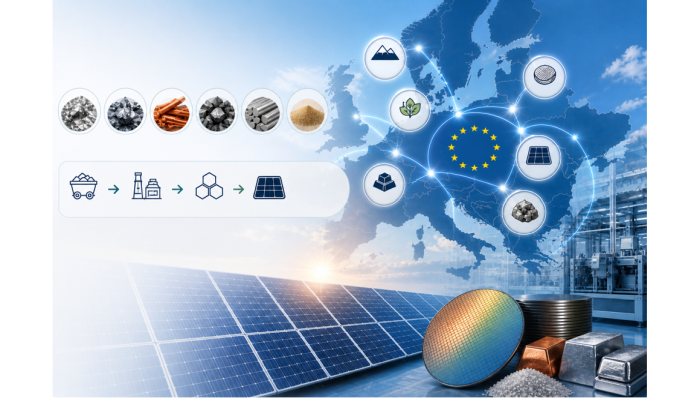
The study, carried out by TUD, examined the global supply chains of six key materials – silver, silicon, copper, bismuth, aluminium, and silica sand – tracking their journey from mining to their incorporation in PV modules imported into the EU. Using global trade data and established indicators for supply concentration and governance, the analysis provides valuable insights into vulnerabilities and opportunities within the European PV value chain.
The results show that silicon presents the highest supply risk, particularly in the stages of doped wafer production and upstream processing. These stages are highly concentrated geographically and often associated with lower governance standards. China plays a dominant role across nearly all silicon processing steps, reinforcing Europe’s dependence on external suppliers. In contrast, copper stands out as a more resilient material, with more diversified mining sources and stronger governance conditions.
The study also highlights that Europe’s domestic production currently plays a limited role in supplying materials for PV modules. For example, EU-produced silver contributes to only around 1% of the silver used in imported modules, while much of Europe’s refining capacity is bypassed as finished modules are imported directly. Similarly, while countries across Europe contribute to different parts of the value chain, such as silicon production in Norway, wafer manufacturing in Lithuania, and refining in Belgium, these capabilities remain fragmented and insufficiently connected.
At the same time, the analysis identifies clear opportunities to strengthen European supply chains, particularly by expanding intermediate processing capacity and better integrating existing capabilities across regions.
Importantly, the findings underline the relevance of the SiLEAN approach. By introducing silver-free copper metallization, reducing the use of bismuth, and enabling epitaxial wafer technologies, SiLEAN directly addresses some of the most critical supply risks identified. These innovations not only improve performance and reduce costs but also contribute to a more secure and sustainable PV ecosystem in Europe.
The full report is available here.