
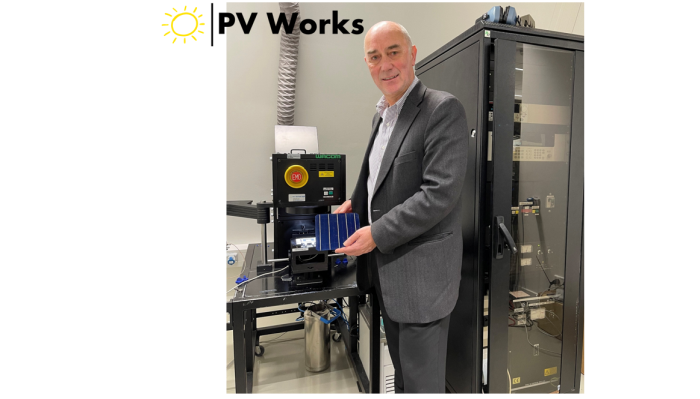
My name is Miro Zeman. I work at the Delft University of Technology in the field of photovoltaics. At the end of 2020, I co-founded a start-up PV Works with a colleague, where I currently work as CEO. The mission of PV Works is to help companies, organizations and individuals optimize design, performance and integration of PV components and systems using advanced multi-scale modelling. In the SiLEAN project we apply our modeling expertise to calculate performance and energy yield of modules based on novel silicon heterojunction (SHJ) solar cells. These results are important for the life cycle analysis evaluating the environmental impact of the novel SHJ solar cell concepts.
What was your original motivation to become a researcher?
I studied electrical engineering and carried out my PhD research on a promising semiconductor material for solar cells. The prospect of developing solar cells to a level where they can deliver cheap electricity for everyone was a motivation to dedicate my professional life to continue research and development of PV technology.
What is your (main) research area today?
My main research area today is effective integration of PV systems into local electricity systems. This is an important topic in the period of extensive electrification of society when the ambition is to use renewable energy sources such as solar and wind energy for generating electricity.
What is the main objective of your team in SiLEAN?
The main objective of PV Works is to accurately calculate performance of novel silicon heterojunction solar cells developed in the SiLEAN project and calculate the energy yield of modules based on these solar cells in different locations.
What expertise and facilities does your team have to meet those objectives?
Our team has used the modelling expertise developed at the Delft University of Technology in the Photovoltaic Materials and Devices (PVMD) group in the last 30 years. We use software that is based on accurate physical models that describe material properties and operational behavior of solar cells and semiconductor devices in general.
Which aspects of your research at SiLEAN do you believe are the most innovative and what unique opportunities offer SiLEAN to yourself and/or your organisation?
The most innovative aspect is that our software can calculate the performance and energy yield of solar modules that do not exist yet. The SiLEAN project has given us the opportunity to validate this innovative approach and help to optimize the structures of novel silicon heterojunction solar cells for achieving a higher efficiency.
How do you see the future use of the SiLEAN results and the impact of SiLEAN project in our daily lives?
The aim of SiLEAN project is to develop the next generation of silicon heterojunction (SHJ) solar cells that are more efficient and contain significantly less critical raw materials. These results will lead to more efficient and cheaper solar modules that will make solar electricity accessible to even larger part of global population and contribute to the energy transition towards sustainable energy.